Source pigment free guava juice powder for food, medicine, and health care
Compare 30 listings of pigment free guava juice powder from verified Chinese manufacturers. Buyers can evaluate specifications, certifications, and pricing for applications in food, medicine, and health care products; compare the available evidence and request quotations based on your requirements.
Key considerations
Products List




Comprehensive Sourcing Guide
Pigment Free Guava Juice Powder Sourcing Guide
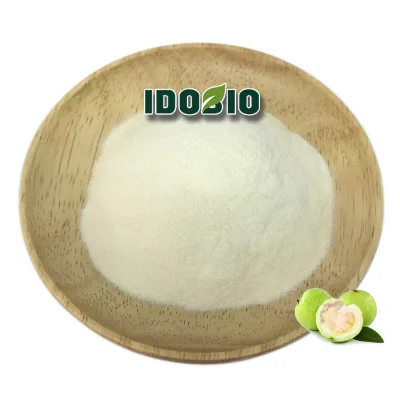
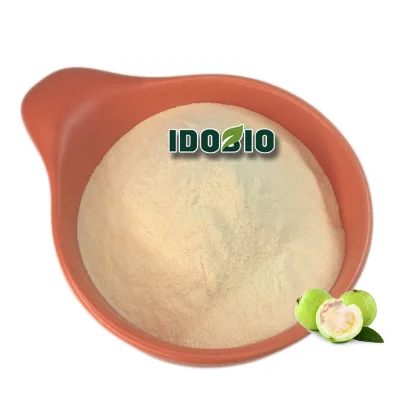
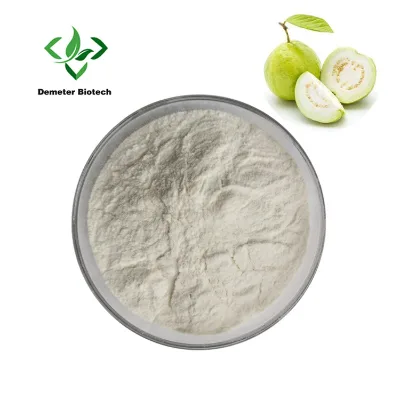
Procuring pigment-free guava juice powder requires distinguishing between products that rely on natural fruit coloration and those that may contain synthetic additives. The supplied data indicates that specific listings explicitly declare "No Synthetic Pigments" and "No Additives," ensuring the pink or yellowish hue originates solely from the fruit itself. Buyers must verify that the "Appearance" matches the natural variation of the source material, as some batches may present as pink powder while others appear yellowish depending on the ripeness of the guava used.
When evaluating suppliers, it is critical to confirm that the "Extract Source" is strictly guava, as some listings in the dataset reference mango, which would be a critical error for this specific keyword. The product is generally available in a powder state with a particle size ranging from 60 to 80 mesh, suitable for various processing needs. Sourcing teams should prioritize vendors who provide clear evidence of the "No-GMO" and "Gluten Free" status to ensure the final ingredient meets clean-label requirements for modern food and beverage applications.
Product Scope and Observed Listing Signals
The market for this ingredient typically targets the health care and food sectors, where the "Function" is defined as health protection through natural bioactive compounds. Listings often specify the "Application Form" as capsules or tablets, indicating a strong demand for this powder in dietary supplement manufacturing. The "Active Ingredient" duration of two years suggests a specific shelf-life stability profile that buyers must align with their inventory turnover rates and storage capabilities.
Buyers should note that the "Packaging" options vary significantly, ranging from bottles and cans to drums, with specific configurations like 5kg bags packed three to a carton. This variability impacts logistics planning and storage requirements, particularly for facilities with limited warehouse space. The "Standard" for the product often cites ratios like 10:1 or 20:1, which refers to the extraction concentration, a key metric for determining the potency and cost-efficiency of the raw material relative to the final product yield.
Technical Specifications to Verify
Verification of the particle size is essential for ensuring proper solubility and flowability in downstream manufacturing processes. The observed specifications indicate a mesh size of 60 to 80, which is generally suitable for blending into dry mixes or reconstituting into liquids. Buyers must confirm that the "Partical Size" remains consistent across batches, as variations can lead to clumping or uneven distribution of the active compounds in the final formulation.
The "Test Method" employed by the supplier is another critical technical parameter, with data showing the use of UV HPLC and TLC for quality assurance. These analytical techniques are necessary to quantify the flavonoid content and ensure the absence of contaminants or undeclared substances. Procurement teams should request recent test reports that specifically reference these methods to validate that the "Grade" is indeed food grade and that the product meets the rigorous purity standards required for human consumption.
Compliance and Safety Documentation
Regulatory compliance is paramount when sourcing ingredients for the medicine and health care industries. The dataset confirms that suppliers often hold ISO certifications, and some listings explicitly mention FDA and BRC certifications. Buyers must verify that the specific supplier holds current, valid certificates that cover the manufacturing facility and the specific product line, as these certifications are not automatically transferable across different product models or origins.
Safety documentation must also address the "Storage Method," which is listed as normal, implying standard ambient conditions are sufficient for preservation. However, the "Active Ingredient" stability of two years necessitates a clear understanding of the expiration timeline from the date of manufacture. Procurement contracts should mandate that all shipments include a Certificate of Analysis (CoA) and a Certificate of Origin to prove the product was manufactured in Xi'an, Shaanxi, or Hainan, China, ensuring traceability back to the source.
Cost Drivers and Commercial Terms
The price range observed in the market spans from 1.8 to 50 USD, a significant variance that reflects differences in extraction ratios, purity levels, and packaging formats. The "MOQ" (Minimum Order Quantity) also fluctuates widely, from as low as 1 kg to as high as 510 kg, influencing the total cost of ownership for small-scale startups versus large industrial buyers. Understanding these variables is crucial for budgeting, as higher extraction ratios like 20:1 typically command a premium price compared to standard fruit powders.
Commercial terms must be negotiated with attention to the "Sample" availability, which is often provided in quantities of 10-20g for initial quality assessment. This low sample threshold allows buyers to conduct in-house testing without a significant financial commitment before placing a bulk order. Additionally, the "Ingredients" list, which may include fresh guava and maltodextrin, affects the cost structure, as the inclusion of fillers like maltodextrin can lower the price per unit while altering the nutritional profile of the final powder.
Supplier Qualification and Quality Control
Supplier qualification should begin with a rigorous review of their "Speciality" claims, such as being 100% natural, non-GMO, and free from gluten. These attributes are not merely marketing terms but are critical differentiators in the health food market. Buyers must request third-party audit reports or on-site inspection results to validate that the supplier's production lines are dedicated to preventing cross-contamination with allergens or synthetic additives.
Quality control protocols must extend beyond the initial sample to include batch-to-batch consistency checks. The "Product Name" is consistently listed as Guava Powder, but the "prod_model" varies, such as A903 or A1603, suggesting different production runs or formulations. Procurement teams should establish a protocol for random sampling of incoming shipments to verify that the "Color" and "Appearance" remain consistent with the approved reference standard, ensuring that the natural pink or yellowish hue does not degrade over time.
Long-Term Procurement Checks
Establishing a long-term partnership requires regular re-verification of the supplier's certification status and adherence to evolving food safety standards. The "Standard" for the product, often cited as food grade, must be maintained even as regulatory landscapes shift in the target export markets. Buyers should schedule annual audits to ensure that the "prod_origin" remains consistent and that the supplier continues to meet the specific "Application" requirements for health care products and food manufacturing.
Finally, supply chain resilience depends on monitoring the "Lead Time" and production capacity, which are not explicitly detailed in the provided facts but are critical for operational planning. Buyers should negotiate service level agreements that define acceptable delivery windows and contingency plans for supply disruptions. Regular performance reviews based on the "Test Method" results and "Certification" validity will ensure that the pigment-free guava juice powder continues to meet the high-quality expectations of the end consumer throughout the product lifecycle.
FAQs
What certifications are available for guava powder?
Guava powder is available with HACCP, ISO, FDA, and BRC certifications. These credentials ensure the product meets international safety and quality standards for food and health care applications. Buyers can select suppliers based on specific regulatory requirements for their target markets.
What is the typical packaging for guava powder?
Guava powder is commonly packaged in drums, bottles, cans, or bags. Standard options include 5kg bags with three bags per carton. This flexible packaging supports various storage needs and ensures product integrity during shipping and handling for bulk industrial buyers.
Can guava powder be customized for specific applications?
Yes, customization is available for guava powder to suit specific industrial needs. Products can be tailored for use in capsules, tablets, or direct food applications. This flexibility allows manufacturers to integrate the powder into diverse health care and food product lines effectively.
What is the minimum order quantity for guava powder?
The minimum order quantity ranges from 1 kg to 510 units depending on the supplier. Small samples of 10-20g are often available for testing. This wide MOQ range accommodates both small-scale trials and large-scale industrial procurement requirements for bulk buyers.
Where is guava powder typically sourced from?
Guava powder is primarily sourced from regions like Xi'an in Shaanxi Province and Hainan Province in China. These locations are known for producing food-grade powders with specific mesh sizes. Buyers can trace origins to ensure quality and supply chain transparency.
What specifications are available for guava powder mesh size?
Guava powder is available in various mesh sizes, including 60 mesh and 60-80 mesh. These specifications ensure consistent particle size for different processing needs. The powder is often food grade and suitable for direct incorporation into various health and food products.